
Pembroke Pines Injury Cases: Proving Fault Without Witnesses
Car accidents don’t always happen in front of a crowd. In many crashes across Pembroke Pines, there may be no eyewitnesses at all. No one standing nearby, no drivers stopping to help, and sometimes no surveillance camera in sight.
When this happens, injured drivers often worry about one thing:
“How can I prove the other driver caused the accident if nobody saw it?”
The good news is that witness testimony is only one type of evidence in a personal injury case. In reality, many successful injury claims rely on other types of proof—physical evidence, expert analysis, digital records, and official documentation.
In fact, some cases with no witnesses still produce very strong fault evidence.
Let’s break down how fault can be proven after an accident—even when nobody saw the crash.
Understanding Fault in Florida Injury Cases
Before looking at evidence, it helps to understand what “fault” actually means in an accident claim.
Under Florida law, the injured party must generally show that another driver was negligent. Negligence occurs when someone fails to exercise reasonable care and causes harm.
Common examples include:
- Running a red light
- Failing to yield the right of way
- Distracted driving
- Speeding
- Following too closely
- Driving under the influence
Even though Florida operates under a no-fault insurance system, proving negligence still matters when injuries exceed the limits of Personal Injury Protection (PIP) benefits under the laws of Florida.
Once serious injuries occur, the injured person may pursue compensation from the at-fault driver. That’s where fault evidence becomes essential.
Police Accident Reports Often Provide Key Evidence
One of the most important pieces of documentation after a crash is the police accident report.
When officers respond to an accident scene, they typically gather information such as:
- The location of vehicle damage
- Road conditions
- Statements from drivers involved
- Traffic signals or signs at the intersection
- Visible skid marks or debris
- Any citations issued
Officers may also include their preliminary assessment of what happened.
While a police report alone doesn’t legally determine fault, it can strongly influence how insurance companies evaluate the claim. If an officer cites a driver for a violation—such as running a red light—that citation becomes powerful supporting evidence.
Vehicle Damage Tells a Story
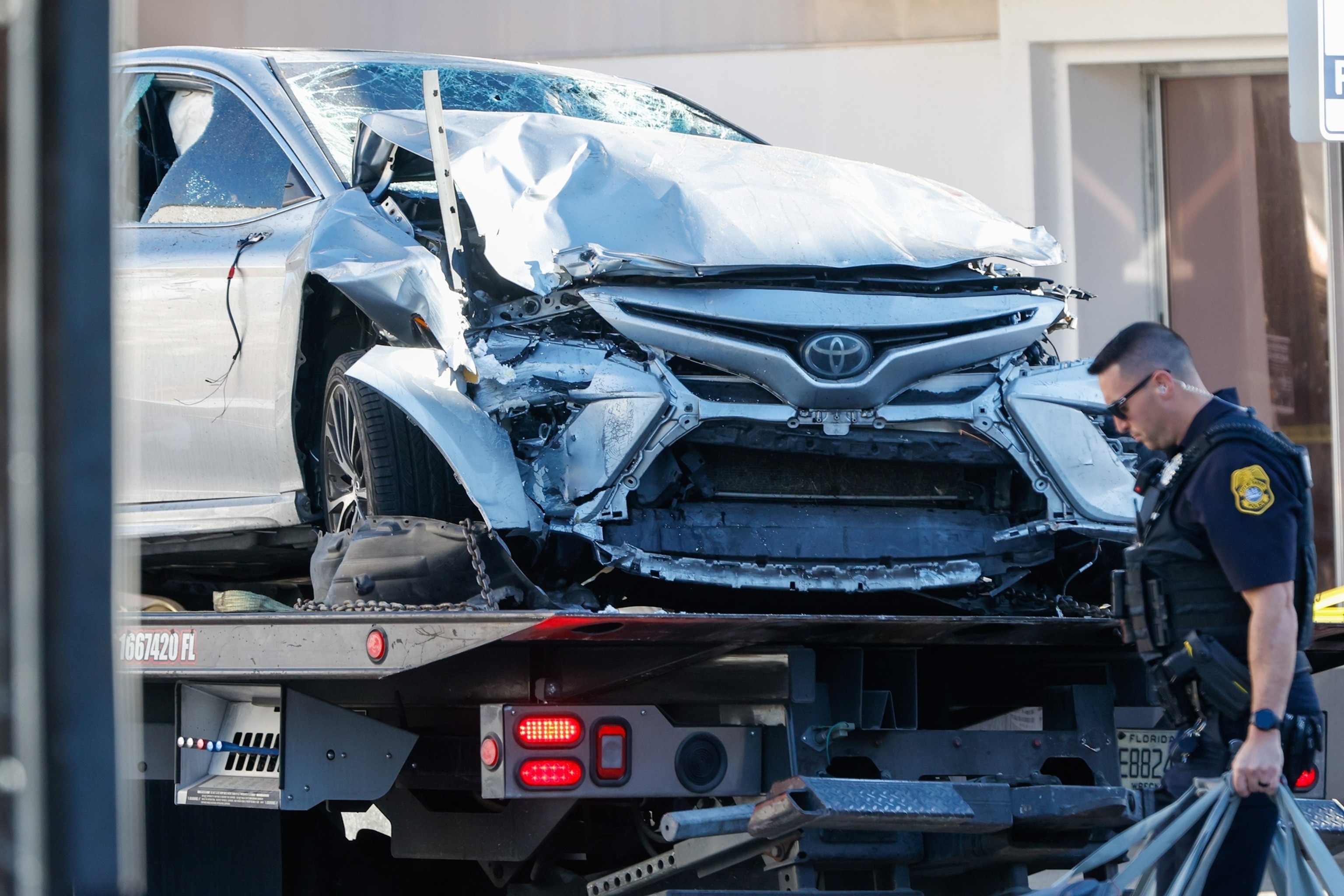
After a collision, the location and severity of vehicle damage can reveal a great deal about how the accident happened.
For example:
- Rear-end damage typically suggests a following driver failed to stop in time.
- Side-impact damage may indicate someone ran a stop sign or failed to yield.
- Front-end collisions can point toward speeding or improper lane changes.
Insurance adjusters and accident reconstruction experts carefully analyze vehicle damage patterns. The direction of impact, crush depth, and paint transfers often help reconstruct the sequence of events.
Even without witnesses, the vehicles themselves may provide the strongest clues.
Skid Marks and Roadway Evidence
Physical evidence left on the road often plays a crucial role in proving fault.
Investigators look for signs such as:
- Skid marks
- Tire marks
- Debris patterns
- Gouges in the pavement
- Fluid spills
These details help experts determine:
- Vehicle speed before impact
- Braking distance
- Point of collision
- Direction of travel
For instance, long skid marks behind one vehicle might show that a driver tried to brake suddenly, suggesting they were traveling too fast or following too closely.
This type of evidence can help reconstruct the accident even when nobody witnessed it.
Traffic Cameras and Surveillance Footage
Although a crash may appear unwitnessed, modern cities often have cameras nearby.
In and around Pembroke Pines, possible sources of footage include:
- Traffic signal cameras
- Nearby businesses
- Gas stations
- Parking lots
- Residential security cameras
- Dash cameras from other vehicles
Many drivers don’t realize that video evidence can disappear quickly. Some systems automatically erase footage within days.
That’s why accident investigations often move quickly to request recordings before they are deleted.
A short clip showing a driver running a red light or making an illegal turn can instantly resolve a fault dispute.
Vehicle Data Recorders (Black Box Evidence)
Most modern vehicles contain event data recorders, sometimes called automotive “black boxes.”
These devices record information immediately before a crash, such as:
- Vehicle speed
- Brake usage
- Throttle position
- Steering inputs
- Airbag deployment timing
This data can reveal whether a driver was speeding, braking suddenly, or accelerating at the moment of impact.
While accessing black box data may require specialized equipment or legal requests, it can provide extremely precise evidence about how the accident occurred.
Cell Phone Records and Distracted Driving
Distracted driving is a major cause of accidents across Florida.
Even without witnesses, it may still be possible to determine whether a driver was using their phone at the time of the crash.
Cell phone records can show:
- Text messages sent or received
- Call activity
- App usage timestamps
If records reveal a text message sent seconds before impact, that evidence can support claims that the driver was not paying attention to the road.
Digital evidence like this has become increasingly important in modern accident investigations.
Accident Reconstruction Experts
In more complex cases, attorneys may work with accident reconstruction specialists.
These experts use physics, engineering principles, and computer modeling to recreate the crash.
Their analysis may include:
- Measuring vehicle damage
- Reviewing roadway evidence
- Examining crash scene photos
- Studying vehicle data recorders
- Calculating speeds and angles of impact
Using specialized software, reconstruction experts can produce visual models showing how the accident likely occurred.
These expert opinions often become powerful evidence in insurance negotiations and courtroom trials.
Statements from the Drivers Involved
Even when no outside witnesses exist, statements from the drivers themselves can influence fault determinations.
Sometimes drivers accidentally reveal key details during conversations with police or insurance adjusters.
For example, a driver might say:
- “I didn’t see the other car.”
- “I thought I could make the light.”
- “I looked down for a second.”
Admissions like these can support negligence claims.
Because of this, legal professionals often advise accident victims to avoid discussing fault at the scene and to stick to factual descriptions.
Photographs Taken Immediately After the Crash
Photos taken at the accident scene can become valuable evidence later.
Images that help support a claim include:
- Vehicle damage from multiple angles
- Road signs and traffic signals
- Skid marks on the pavement
- Weather conditions
- Debris locations
- Road layout or lane markings
These photographs capture details that may disappear within hours after the crash.
For example, debris might be cleared from the roadway, or skid marks may fade after traffic passes over them.
Good photographs often strengthen accident reconstruction efforts.
Medical Records Linking Injuries to the Crash
Medical documentation also plays an important role in injury cases.
Doctors record:
- The type of injuries sustained
- The mechanism of injury described by the patient
- Diagnostic imaging results
- Treatment plans and recovery progress
These records can support the claim that the accident directly caused the injuries.
For example, certain injury patterns—such as whiplash or dashboard knee injuries—may align with the mechanics of specific types of collisions.
Medical evidence therefore helps confirm the events described in the accident claim.
Florida’s Comparative Fault Rule
Even when fault can be proven, the issue may not always be all-or-nothing.
Florida uses a modified comparative negligence system.
This means a person’s compensation may be reduced if they share responsibility for the accident.
For example:
- If a driver is found 20% responsible, their damages may be reduced by 20%.
- If they are more than 50% responsible, they may be barred from recovering damages.
Because of this rule, insurance companies often try to argue that both drivers contributed to the crash.
Strong evidence becomes critical to minimize claims of shared fault.
Why Evidence Collection Matters Immediately After a Crash
When accidents occur without witnesses, the strength of a claim often depends on how quickly evidence is preserved.
Key steps may include:
- Reporting the accident to police
- Photographing the scene and vehicles
- Seeking medical evaluation promptly
- Documenting property damage
- Identifying nearby cameras
These early actions help protect evidence before it disappears.
Even small details—like tire marks or debris patterns—can become important later.
The Role of Legal Investigation
Because unwitnessed accidents can involve disputed facts, legal investigations often examine multiple evidence sources.
This may include:
- Obtaining police reports
- Requesting video footage
- Reviewing phone records
- Consulting accident reconstruction experts
- Collecting vehicle data recorder information
Combining these pieces of evidence allows investigators to build a complete picture of the crash.
In many cases, this evidence proves fault just as effectively as eyewitness testimony.
Final Thoughts
Proving fault in a Pembroke Pines injury case without witnesses can seem challenging at first. But eyewitnesses are only one part of the evidence puzzle.
Many successful injury claims rely on other forms of proof, including:
- Police accident reports
- Vehicle damage analysis
- Roadway evidence such as skid marks
- Traffic and surveillance cameras
- Black box vehicle data
- Cell phone records
- Accident reconstruction experts
- Medical documentation
Together, these elements can clearly demonstrate how an accident occurred and who was responsible.
While witness testimony can certainly strengthen a case, it’s far from the only way to establish liability. With careful investigation and proper documentation, fault can still be proven—even when the crash initially appears unwitnessed.