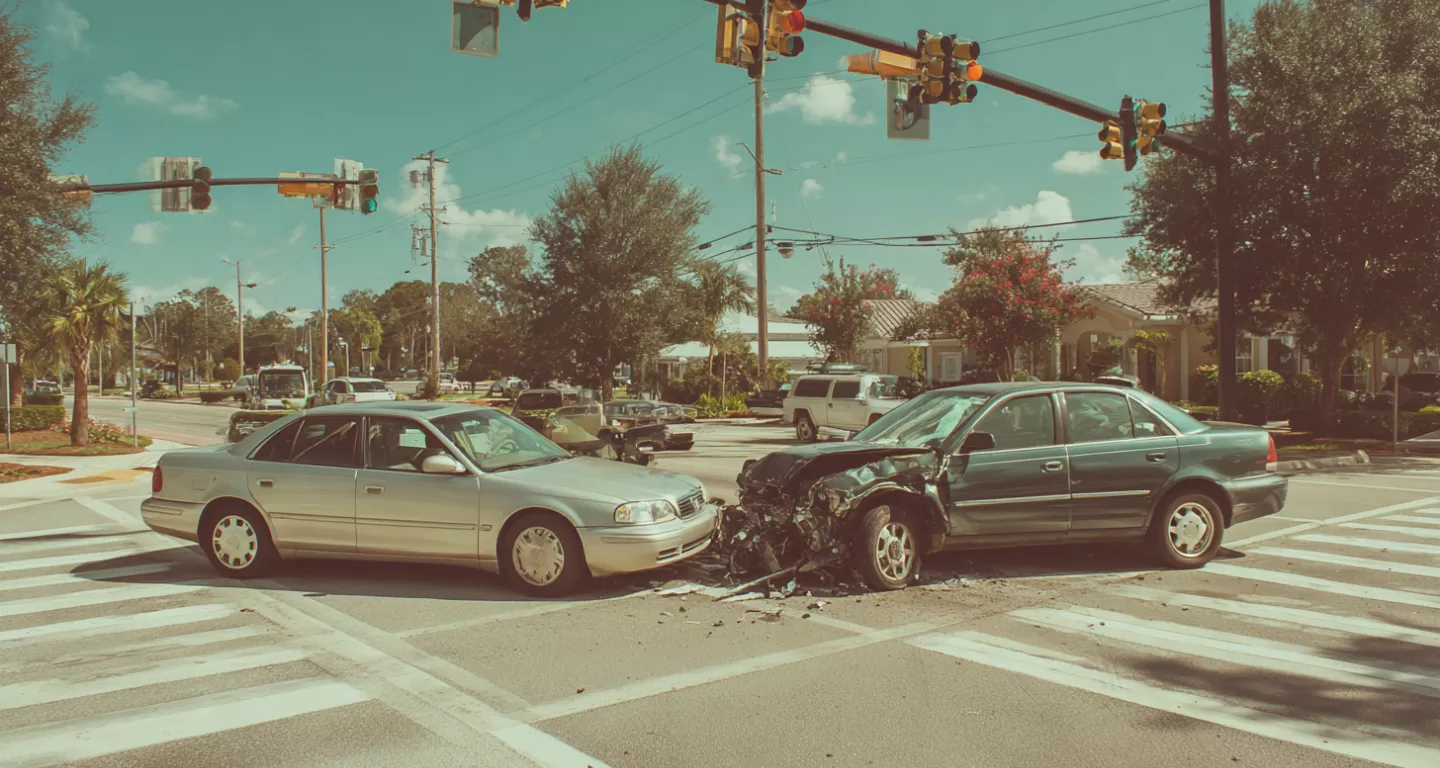
Hollywood Intersection Crashes: Proving Who Had the Green
Intersections in Hollywood, Florida, like those on U.S. 1, Sheridan Street, Johnson Street, and Hollywood Boulevard, are among the most common sites of traffic accidents. With heavy commuter traffic, frequent pedestrians, and complex signal patterns, intersection collisions can quickly become complicated liability disputes. A frequent point of contention in these cases is determining who had the green light at the time of the crash.
Proving right-of-way is critical because Florida’s personal injury law assigns fault based on negligence, and establishing which driver ran a red or green light can directly affect compensation for medical bills, lost wages, and pain and suffering. Unfortunately, insurance adjusters often dispute right-of-way claims, especially when the evidence is ambiguous.
This article explains the challenges of proving who had the green, the types of evidence that strengthen a claim, and how a Hollywood personal injury attorney can protect your rights.
Why Determining Right-of-Way Matters
In Florida, comparative negligence governs accident liability. Even a slight error in judgment at an intersection can influence fault percentages, which directly impacts settlement or jury awards.
- Running a Red Light – Typically viewed as negligence per se, meaning the driver who ran the red light is presumed liable.
- Failure to Yield – If a driver ignores a stop sign or traffic signal, they can be held responsible.
- Ambiguous Situations – Sometimes both drivers claim they had the green, which creates a dispute over who is responsible.
Proving who had the green is often the key to establishing liability and securing fair compensation.
Common Challenges in Intersection Crashes
- Conflicting Driver Statements
- Each driver may claim they had the right-of-way.
- Statements made immediately after the accident are sometimes inconsistent due to shock or stress.
- Lack of Traffic Camera Footage
- Not all intersections are equipped with cameras.
- Even if cameras exist, footage may not be saved or may be low-quality.
- No Independent Witnesses
- Pedestrians or other motorists may not have observed the collision.
- Without witnesses, determining right-of-way can rely heavily on vehicle positions, damage patterns, and expert analysis.
- Signal Malfunctions
- A malfunctioning traffic light can complicate causation.
- Both drivers may claim the light was green, requiring further investigation.
- Weather and Visibility
- Rain, fog, or nighttime conditions can obscure signals, creating ambiguity about who had the green.
Types of Evidence That Help Prove Who Had the Green
To establish right-of-way, a combination of physical evidence, expert analysis, and witness testimony is often required.
1. Traffic Signal Records
- Many intersections in Hollywood are connected to the Florida Department of Transportation (FDOT) signal control system.
- These records can show timing sequences and signal phases at the exact time of the accident.
- Signal logs are strong evidence in disputed right-of-way cases.
2. Police Reports
- Officers document initial driver statements, skid marks, vehicle positions, and traffic conditions.
- The report may note visible signal compliance or violations, witness accounts, and citations issued.
3. Photographs and Videos
- Accident scene photos show vehicle placement, skid marks, and traffic signal visibility.
- Dashcam or smartphone footage can capture the moments leading up to the crash.
- Nearby security cameras from businesses or intersections may provide additional perspectives.
4. Witness Statements
- Pedestrians, other drivers, or passengers may confirm which vehicle entered the intersection first.
- Credible witness testimony can support or refute conflicting driver accounts.
5. Accident Reconstruction Experts
- Specialists analyze vehicle speeds, angles of impact, and braking patterns.
- Reconstruction can determine likely positions at the moment of impact, helping establish who had the green.
- Experts may also consider reaction times, signal timing, and visibility factors.
6. Vehicle Damage Analysis
- Impact location, vehicle deformation, and damage patterns can indicate which vehicle struck the other and the likely positions at collision.
- This analysis often supports expert conclusions about right-of-way.
Steps to Take After an Intersection Accident
- Ensure Safety and Seek Medical Care
- Prioritize health; even minor pain may indicate serious injuries.
- Early documentation is essential for personal injury claims.
- Document the Scene
- Take photographs of vehicles, skid marks, traffic lights, and intersection layout.
- Note the date, time, and weather conditions.
- Collect Witness Information
- Get names and contact information of anyone who saw the accident.
- Even neighbors or business employees may be helpful.
- Preserve Vehicle Evidence
- Avoid moving vehicles until they are photographed or assessed by law enforcement, unless safety requires.
- Keep repair estimates and damage records.
- Report to Insurance and Police
- File a police report immediately.
- Notify your insurance company but avoid admitting fault.
How a Hollywood Personal Injury Attorney Can Help
Disputes over who had the green can be challenging to resolve without legal guidance. An experienced attorney provides critical support:
- Gather Evidence – Collect traffic signal data, camera footage, witness statements, and accident reconstruction reports.
- Coordinate Experts – Reconstruction and traffic signal experts provide objective analysis of intersection conditions.
- Handle Insurance Disputes – Attorneys negotiate with adjusters who may attempt to assign partial or full fault to the victim.
- Maximize Compensation – By establishing clear liability, lawyers help secure payment for medical expenses, lost wages, property damage, and pain and suffering.
- Litigation Preparedness – If necessary, attorneys can present the case in court, using experts and evidence to prove right-of-way.
Local attorneys in Hollywood also understand Broward County traffic patterns, common accident hotspots, and intersection design, which can be crucial in proving causation.
Common Mistakes to Avoid
- Admitting Fault at the Scene
- Even a casual apology can be misinterpreted by insurance adjusters.
- Failing to Seek Immediate Medical Care
- Delayed treatment may weaken personal injury claims.
- Neglecting Evidence Preservation
- Removing vehicles or discarding damaged parts can reduce claim value.
- Posting About the Accident on Social Media
- Statements or photos may be used against you in disputes over liability.
- Not Consulting an Attorney
- Attempting to resolve disputes alone can result in low settlements or denied claims.
Practical Tips for Intersection Accident Victims
- Document Everything – Photos, witness contacts, vehicle damage, and traffic signals.
- Seek Prompt Medical Attention – Protect health and create official injury records.
- Keep Detailed Notes – Record pain, daily limitations, and time of symptom onset.
- Preserve Evidence – Vehicles, repair estimates, and accident scene elements.
- Consult a Personal Injury Attorney – Legal guidance ensures disputes about right-of-way are properly addressed.
Real-World Example
- Hollywood Boulevard Intersection Crash – Victim’s vehicle collided with another at a busy traffic light. Both drivers claimed they had the green.
- Dispute – Insurance adjuster initially suggested shared fault.
- Attorney Action – Collected traffic signal data, eyewitness accounts, and hired a reconstruction expert.
- Outcome – Expert analysis confirmed the other driver ran a red light. Full compensation for medical bills, lost wages, and pain and suffering was recovered.
This example illustrates that proving who had the green often requires more than driver testimony; expert evidence and thorough documentation are essential.
Conclusion
Intersection crashes in Hollywood are common, and disputes over who had the green can significantly complicate personal injury claims. Insurance companies frequently challenge liability, citing conflicting statements, signal malfunctions, or minor vehicle damage.
Strong evidence—including police reports, traffic signal data, witness statements, photographs, and expert analysis—is critical for establishing right-of-way. A Hollywood personal injury attorney ensures that evidence is properly collected, causation is clearly demonstrated, and disputes with adjusters or opposing parties are resolved effectively.