
Fort Lauderdale Bridge-Related Crashes: Wind, Lanes, and Liability
Fort Lauderdale is often called the “Venice of America” because of its extensive network of canals, waterways, and rivers. As a result, bridges are a major part of the city’s transportation system. Drivers regularly cross drawbridges and elevated spans over the New River, Intracoastal Waterway, and other waterways throughout Broward County.
While these bridges help keep traffic moving across the city, they can also create unique driving hazards. High winds, narrow lanes, drawbridge operations, and heavy tourist traffic can all contribute to serious accidents. When crashes occur on bridges in Fort Lauderdale, determining who is responsible can become complex.
Understanding the risks associated with bridge-related crashes—and how liability may be determined—can help injured victims protect their rights and pursue compensation.
Why Bridge Accidents Occur in Fort Lauderdale
Fort Lauderdale contains dozens of bridges that connect different neighborhoods and allow vehicles to cross waterways safely. Some bridges are fixed spans, while others are movable drawbridges designed to allow boats to pass through.
These bridges often experience heavy traffic from:
-
Commuters traveling between neighborhoods
-
Tourists heading to beaches and marinas
-
Delivery vehicles servicing waterfront businesses
-
Commercial traffic moving through Broward County
-
Cyclists and pedestrians using bridge sidewalks
Because bridges concentrate traffic into limited space, accidents can occur more easily than on wider roadways.
In addition, bridges expose drivers to environmental conditions—such as wind and rain—that can affect vehicle control.
Unique Hazards of Bridge Driving
Bridges present several driving challenges that are not always present on regular roads.
Strong Crosswinds
Bridges are typically elevated above surrounding terrain and water, which means they are exposed to strong wind gusts.
Crosswinds can push vehicles sideways, particularly larger vehicles such as trucks, vans, or SUVs. Sudden wind gusts may force vehicles into adjacent lanes or cause drivers to overcorrect.
High-profile vehicles are especially vulnerable. Strong winds have been known to push large trucks across lanes or even overturn them on bridges.
Narrow Lanes and Limited Shoulders
Many bridges in Fort Lauderdale have narrow driving lanes and limited space for emergency stopping.
This can create dangerous conditions when:
-
Vehicles break down
-
Drivers attempt to change lanes
-
Traffic slows suddenly
Without wide shoulders, drivers may have little room to maneuver safely.
Drawbridge Operations
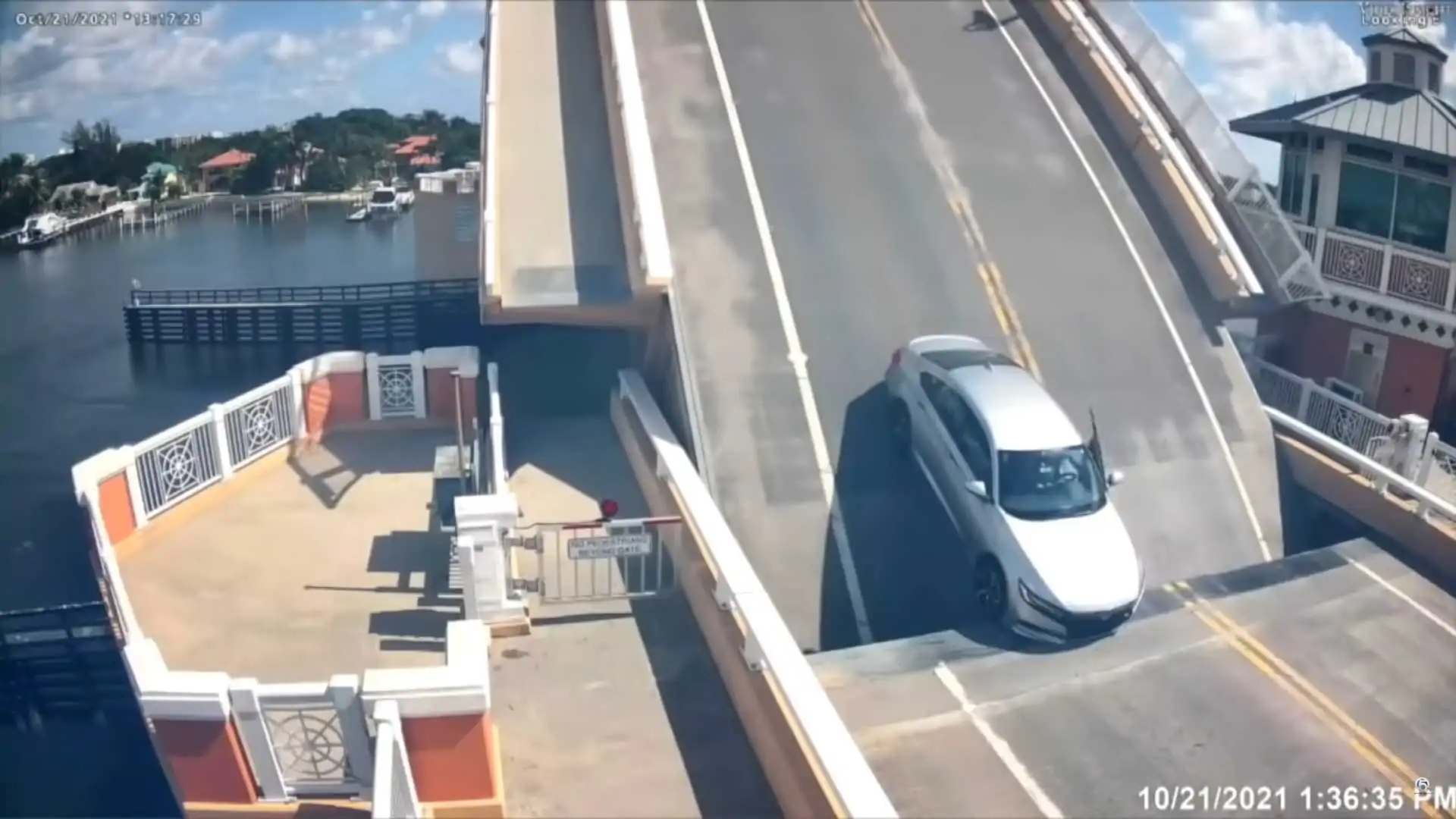
Several Fort Lauderdale bridges are movable drawbridges that open to allow boats and yachts to pass.
These bridges stop traffic periodically, which can lead to sudden braking and rear-end collisions.
In rare cases, mechanical errors or operational mistakes can create dangerous situations involving vehicles or pedestrians on the bridge.
Slippery Surfaces
Bridge surfaces can become slick during rainstorms due to metal grates, expansion joints, or accumulated moisture.
These conditions may increase the risk of skidding or hydroplaning.
Examples of Bridge Risks in Fort Lauderdale
Bridge-related accidents in Fort Lauderdale sometimes involve unusual circumstances.
For example, a construction incident in 2024 occurred when a section of a crane collapsed onto the Southeast Third Avenue Bridge over the New River, injuring motorists and causing a fatality.
Incidents like this demonstrate how construction activity near bridges can also contribute to accident risks.
Even routine bridge crossings can become dangerous when traffic, environmental conditions, and mechanical factors combine.
Common Causes of Bridge-Related Accidents
Several factors frequently contribute to bridge accidents in Fort Lauderdale.
Speeding
Drivers who travel too fast across bridges may struggle to maintain control, especially during windy or wet conditions.
Distracted Driving
Drivers using phones or navigation systems may fail to notice traffic slowing ahead or bridge signals activating.
Sudden Traffic Stops
Drawbridge openings and traffic congestion often lead to sudden braking.
Rear-end collisions are common when drivers follow too closely.
Unsafe Lane Changes
Because bridge lanes are often narrow, unsafe lane changes can easily lead to side-impact crashes.
High Winds
Strong wind gusts may push vehicles into other lanes or cause drivers to lose control.
Construction Activity
Bridge repairs and nearby construction zones may introduce equipment, lane closures, or debris into traffic.
Injuries Often Seen in Bridge Accidents
Bridge crashes can be especially dangerous because vehicles may have limited space to avoid collisions.
Common injuries include:
-
Traumatic brain injuries
-
Spinal cord injuries
-
Broken bones
-
Neck and back injuries
-
Internal bleeding
-
Severe lacerations
Hospitals and trauma centers throughout Broward County—including facilities in Fort Lauderdale, Sunrise, Plantation, and Coral Springs—frequently treat victims injured in bridge-related accidents.
In severe cases, victims may require long-term medical treatment or rehabilitation.
Florida’s No-Fault Insurance System
Florida follows a no-fault insurance system for most car accidents.
Drivers typically rely first on their own Personal Injury Protection (PIP) coverage.
PIP benefits usually include:
-
80% of medical expenses
-
60% of lost wages
However, bridge accidents often cause serious injuries that exceed PIP coverage limits.
When injuries meet Florida’s serious injury threshold, victims may pursue compensation from the at-fault party.
Florida’s insurance laws are outlined in the Florida Statutes:
https://www.leg.state.fl.us/statutes/
Determining Liability in Bridge Accidents
Bridge accident liability depends on the specific circumstances of the crash.
Several parties may potentially be responsible.
Negligent Drivers
Drivers who speed, drive distracted, or fail to adjust to wind or weather conditions may be liable for accidents.
Even when environmental conditions are challenging, drivers are expected to operate their vehicles safely.
Government Agencies
City, county, or state agencies responsible for bridge maintenance may be liable if dangerous conditions exist.
Examples include:
-
Poor road design
-
Lack of warning signs
-
Malfunctioning traffic signals
-
Dangerous pavement conditions
Claims against government entities must follow special legal procedures.
Construction Companies
When construction activity occurs near bridges, contractors must ensure that equipment, debris, and lane closures are properly managed.
Failure to follow safety standards may create liability.
Bridge Operators
For drawbridges, operators responsible for controlling bridge openings must follow strict safety procedures.
Operational mistakes may lead to accidents involving vehicles or pedestrians.
Evidence Used in Bridge Accident Claims
Proving liability often requires collecting strong evidence.
Important evidence may include:
-
Police accident reports
-
Surveillance or traffic camera footage
-
Photographs of the accident scene
-
Wind and weather reports
-
Witness statements
-
Vehicle damage analysis
-
Bridge maintenance records
Accident reconstruction experts may also analyze the crash to determine how environmental conditions affected the vehicles.
Florida’s Comparative Negligence Law
Florida follows a comparative negligence rule, meaning more than one party may share responsibility for an accident.
For example:
-
A driver may have been speeding across a bridge.
-
Another driver may have changed lanes unsafely.
-
High winds may have contributed to the loss of control.
In such cases, compensation may be reduced based on each party’s percentage of fault.
Insurance companies often rely on comparative negligence arguments to reduce claim payouts.
Steps to Take After a Bridge-Related Accident
If you are involved in a crash on a Fort Lauderdale bridge, taking the right steps can help protect your legal rights.
Important actions include:
-
Call law enforcement and request emergency assistance
-
Seek immediate medical treatment
-
Take photographs of the accident scene and vehicles
-
Collect witness contact information
-
Document weather and road conditions
-
Avoid admitting fault
-
Contact a personal injury lawyer
These steps can help preserve evidence needed to support your claim.
Compensation Available After Bridge Accidents
Victims injured in bridge-related crashes may be entitled to compensation for several types of damages.
These may include:
-
Medical expenses
-
Hospital treatment and surgery
-
Rehabilitation and therapy
-
Lost wages
-
Reduced earning capacity
-
Pain and suffering
-
Emotional distress
Serious injuries may also require compensation for long-term care.
Each case depends on the circumstances surrounding the accident.
Why Insurance Companies Often Dispute Bridge Accident Claims
Insurance companies frequently challenge bridge accident claims because environmental conditions can complicate liability.
Common arguments include:
-
Wind or weather caused the accident
-
The driver lost control due to unavoidable conditions
-
Another driver was responsible
Without strong evidence, victims may struggle to prove negligence.
A thorough investigation is often necessary to determine what truly caused the crash.
How a Fort Lauderdale Personal Injury Lawyer Can Help
Bridge accident cases often involve complicated investigations involving weather conditions, road design, and multiple parties.
A Fort Lauderdale personal injury lawyer can assist by:
-
Investigating the accident scene
-
Gathering weather and bridge maintenance records
-
Obtaining surveillance footage
-
Interviewing witnesses
-
Working with accident reconstruction experts
-
Negotiating with insurance companies
-
Filing lawsuits when necessary
Legal representation can significantly improve the chances of recovering fair compensation.
Protecting Your Rights After a Fort Lauderdale Bridge Accident
Bridges are essential to Fort Lauderdale’s transportation network, but they also create unique safety challenges for drivers.
Strong winds, narrow lanes, drawbridge operations, and heavy traffic can all contribute to accidents.
When negligence leads to a bridge-related crash, injured victims have the right to pursue compensation and hold responsible parties accountable.
Speak With a Fort Lauderdale Personal Injury Lawyer Today
If you or a loved one has been injured in a bridge-related accident in Fort Lauderdale or anywhere in Broward County, you may have the right to pursue compensation for your injuries and financial losses.
An experienced personal injury lawyer can review your case, investigate the accident, and guide you through the legal process.
Most personal injury law firms offer free consultations and operate on a contingency fee basis, meaning you pay no upfront fees.
If you have questions about a Fort Lauderdale bridge accident, legal help is available 24/7 to help you move forward with confidence.