
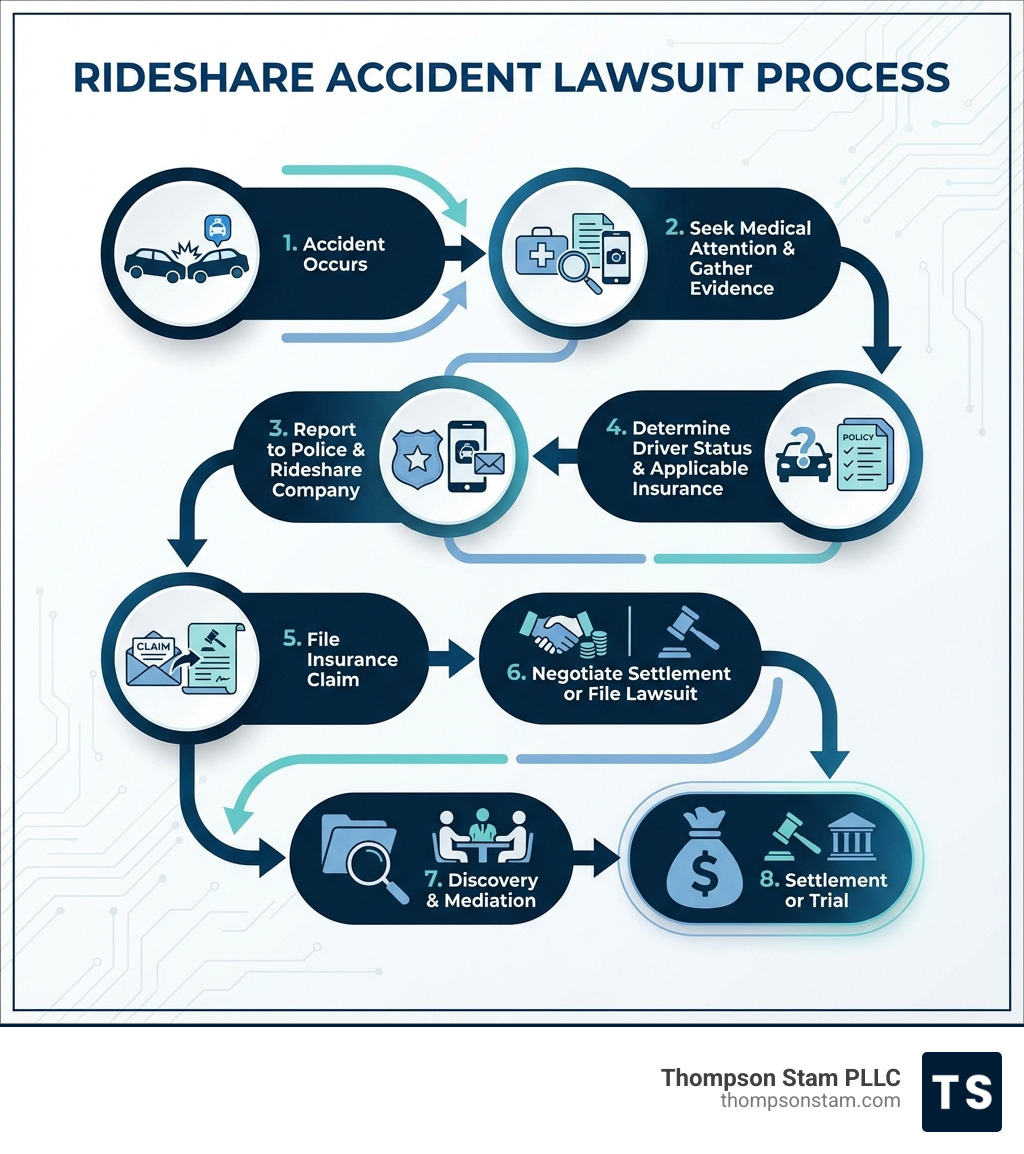
Here’s a practical breakdown of what you can expect from a rideshare accident claim in Sunrise, Florida — from the moment you report the crash to when (and if) you get compensation. Understanding the typical stages and timelines helps you stay prepared and protect your rights.
? Stage 1 — Reporting the Crash
What happens:
- You report the accident to police (911 or local Sunrise PD).
- You notify:
- Your personal auto insurer (to activate PIP/FM coverage),
- The rideshare company (Uber/Lyft) via the app or hotline,
- The at?fault driver’s insurer if another driver caused it.
What to expect:
? You’ll get a crash report number.
? Insurers will open a claim file and assign claim numbers.
Why this matters:
Early reporting preserves coverage and avoids denials for “late notice.”
? Stage 2 — Medical Evaluation & Treatment
What happens:
- Seek medical care immediately or within 24–48 hours.
- Continue treatment as recommended (doctor, PT, specialists).
What to expect:
? Insurers will request medical records.
? Your Personal Injury Protection (PIP) covers some costs regardless of fault first (Florida’s no?fault rule).
Why this matters:
Medical documentation creates a clear link between the crash and your injuries — essential for full compensation.
? Stage 3 — Investigation
What happens: insurers look at:
- Police crash report
- Photos/videos from the scene
- Witness statements
- App logs (ride status at the moment of accident)
- Medical records
What to expect:
? Rideshare companies often respond slowly with app data.
? Insurers may ask you for a recorded statement — answer honestly, but don’t guess.
Why this matters:
App status (offline vs. logged in vs. en route/with passenger) determines which insurance applies and how much coverage is available.
?? Stage 4 — Determining Liability & Coverage
What happens:
- The insurer decides who was at fault and which insurance policy applies (personal, contingent rideshare, or commercial rideshare).
What to expect:
? Disputes may arise over:
- Whose insurance is responsible
- What policies apply
- Whether your injuries meet Florida’s “serious injury” threshold (needed to step outside no?fault for pain and suffering).
Why this matters:
Resolving liability early can significantly speed up your claim.
? Stage 5 — Valuing Your Claim
Insurance adjusters calculate your damages based on:
Economic Damages
- Medical bills (past + expected future)
- Lost wages or reduced earning capacity
- Property damage
Non?Economic Damages
- Pain and suffering
- Emotional distress
- Loss of enjoyment of life
What to expect:
? Insurers may delay making offers while treatment is ongoing.
? They want a full picture of your future needs before estimating value.
? Stage 6 — Settlement Negotiations
What happens:
- Insurer presents a settlement offer.
- You (or your lawyer) may counter.
- Negotiations continue until:
- You agree, or
- You decide to take legal action.
What to expect:
? The first offer is often low — adjusters protect their bottom line.
? Skilled negotiation can significantly increase your recovery.
???? Stage 7 — Lawsuit (If Settlement Fails)
If negotiations don’t yield a fair offer, you may choose to file a lawsuit.
What to expect:
? A lawsuit extends the timeline (often 12?–?36+ months in Florida).
? Both sides exchange evidence (discovery).
? Cases may settle before trial, or go to mediation, arbitration, or a jury.
Why this matters:
Litigation is a powerful tool if insurers refuse to recognize the full extent of your losses.
?? Typical Timelines
| Stage | Estimated Time |
|---|---|
| Early claim reporting | Same day to a few days |
| Initial investigation | Weeks to a few months |
| Medical treatment phase | Weeks to many months |
| Settlement negotiation | 3?–?12+ months |
| Lawsuit/litigation (if needed) | 1?–?3+ years |
Note: Every case is unique — faster in clear, minor injury claims; slower in complex or disputed cases.
?? What Will Slow Down a Claim
Expect delays if:
- You waited to get medical care.
- App status data is slow to arrive.
- Liability is disputed.
- Coverage limits are unclear or contested.
- Multiple insurers are involved.
Delays are common in rideshare claims because of layered insurance and app evidence.
? Tips to Maximize Your Outcome
? Document everything — photos, medical bills, diaries of pain/symptoms.
? Follow your treatment plan — insurers scrutinize gaps in care.
? Be cautious with recorded statements — answer honestly, don’t guess.
? Keep all paperwork organized — makes your claim stronger and faster.
? Consider legal help — especially if serious injuries, coverage disputes, or low offers arise.
? Final Expectation
Expect a rideshare accident claim in Sunrise to be more involved and lengthier than a typical fender?bender claim — because:
- Multiple insurers may be involved
- App status must be verified
- No?fault & serious injury thresholds apply
- Liability and coverage can be complex
But with prompt reporting, strong documentation, and a clear understanding of the process, you increase your chances of a full and fair recovery.
If you want, I can break this down into a printable timeline you can follow step by step — just ask!