
Florida Personal Injury Claims: Evidence That Matters Most
After a serious accident in Florida, injured victims often face a difficult path forward. Medical bills begin to accumulate, work may become impossible during recovery, and insurance companies quickly begin investigating the claim. In many cases, the outcome of a personal injury case depends on one critical factor: evidence.
Strong evidence is the foundation of successful Florida personal injury claims. Whether the accident occurs in Hollywood, Fort Lauderdale, Pompano Beach, or elsewhere in Broward County, the ability to prove what happened—and how it affected your life—can significantly influence the compensation you may receive.
Insurance companies and courts rely on documented proof when determining liability and damages. Understanding the types of evidence that matter most can help accident victims protect their legal rights and build stronger claims.
Why Evidence Is Crucial in Florida Personal Injury Cases
In a personal injury case, the injured party must typically prove several legal elements in order to recover compensation.
These elements often include:
- A person or business owed a duty of care
- That duty was breached through negligent actions
- The negligence caused the accident
- The accident resulted in measurable damages
Evidence helps establish each of these points.
Without strong documentation, insurance companies may challenge the claim by arguing that:
- The accident did not occur as described
- The victim’s injuries were not serious
- The injuries were unrelated to the accident
- The victim was responsible for the incident
Because insurers carefully examine every claim, clear and reliable evidence is essential.
Police Reports and Official Accident Records
One of the most important forms of evidence in many accident claims is the official accident report.
For example, after a car crash in Hollywood or Fort Lauderdale, law enforcement officers often prepare a crash report documenting key details such as:
- The date and location of the accident
- Names and contact information of those involved
- Witness statements
- Initial observations regarding fault
- Road and weather conditions
Although police reports do not always determine liability, they provide an independent account of the incident that can help support a victim’s claim.
In slip and fall cases or other premises liability incidents, businesses may also create incident reports that document the event.
These records can serve as important evidence during insurance investigations.
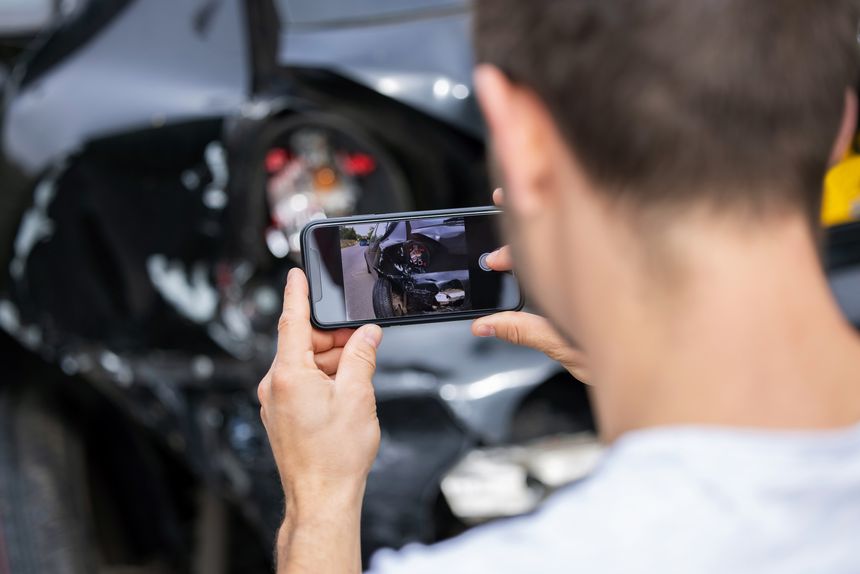
Photographs and Video Evidence
Visual evidence often provides some of the clearest insight into how an accident occurred.
Photos taken at the scene can capture details that may later disappear.
Examples of useful photographs include:
- Vehicle damage after a car accident
- Traffic signals or road conditions
- Skid marks or debris on the roadway
- Hazardous property conditions such as spills or broken stairs
- Poor lighting or uneven surfaces
- Visible injuries immediately after the accident
Video evidence may also be available through traffic cameras, security systems, or nearby businesses.
Busy roads such as I-95, US-1, Hollywood Boulevard, and Sheridan Street often have surveillance systems that may capture accident events.
Because video footage may be overwritten within days, obtaining it quickly can be important.
Medical Records and Injury Documentation
Medical evidence is one of the most powerful forms of proof in any injury claim.
Medical records help establish:
- The nature of the injuries
- The severity of the condition
- The treatment required
- The timeline of recovery
- The connection between the accident and the injury
Examples of medical documentation include:
- Emergency room reports
- Physician evaluations
- Diagnostic imaging such as X-rays or MRIs
- Surgical reports
- Physical therapy records
- Prescription documentation
These records help demonstrate the real impact of the injury on the victim’s health.
Medical documentation is particularly important in Florida car accident claims because of the state’s no-fault insurance system.
Under Florida Statute §627.736, accident victims must seek medical treatment within 14 days of the crash to qualify for Personal Injury Protection (PIP) benefits.
Additional information about Florida statutes can be found on the Florida Legislature website:
https://www.leg.state.fl.us/statutes/
Witness Statements
Independent witnesses often play a valuable role in confirming what happened during an accident.
Witnesses may include:
- Bystanders who saw a car crash
- Customers who observed a fall in a store
- Employees who noticed a dangerous property condition
Witness statements can clarify important details, such as:
- Which driver had the right of way
- Whether a warning sign was present
- Whether a property owner ignored a hazard
When conflicting accounts arise, neutral witness testimony can help establish credibility.
Financial Documentation of Damages
Personal injury claims involve more than proving that an accident occurred. Victims must also demonstrate the financial impact of their injuries.
Evidence of economic damages may include:
- Medical bills and hospital invoices
- Physical therapy costs
- Prescription medication receipts
- Transportation costs for medical appointments
- Pay stubs showing lost wages
- Employer statements confirming missed work
For individuals who cannot return to their previous jobs due to injuries, financial experts may evaluate loss of future earning capacity.
These financial records help determine the value of compensation sought in the claim.
Expert Witness Testimony
In complex personal injury cases, expert witnesses may be needed to explain technical aspects of the accident or injuries.
Examples of expert witnesses include:
Accident reconstruction specialists
These professionals analyze physical evidence to determine how a crash occurred.
Medical experts
Doctors may explain the long-term impact of injuries and future treatment needs.
Economic experts
Financial specialists may calculate long-term income losses.
Expert testimony helps clarify complex information for insurance adjusters, judges, and juries.
Evidence in Premises Liability Cases
Evidence is also critical in premises liability cases, such as slip and fall accidents in businesses or public spaces.
Important evidence in these cases may include:
- Maintenance records showing property inspections
- Cleaning schedules
- Surveillance footage
- Photographs of hazardous conditions
- incident reports created by employees
Property owners in Florida have a duty to maintain reasonably safe conditions for visitors. Evidence helps determine whether they failed to meet this responsibility.
Florida’s Comparative Negligence Law
Evidence also plays a role in determining how responsibility is shared between parties.
Florida follows a comparative negligence rule under Florida Statute §768.81.
This law allows compensation to be reduced if the injured person is partially responsible for the accident.
For example:
- If a victim is found 20 percent responsible, their compensation may be reduced by 20 percent.
Insurance companies often attempt to shift blame to reduce settlement payouts. Strong evidence helps ensure fault is assigned fairly.
Common Mistakes That Can Weaken Evidence
Some accident victims unintentionally damage their cases by failing to preserve important evidence.
Common mistakes include:
Delaying medical treatment
Insurance companies may argue injuries were unrelated to the accident.
Not photographing the accident scene
Hazards may be cleaned or repaired quickly.
Posting about the accident on social media
Posts can be misinterpreted and used against a claim.
Failing to keep records of expenses
Even small costs may be recoverable as damages.
Avoiding these mistakes helps protect the strength of an injury claim.
Why Acting Quickly Is Important
Evidence can disappear quickly after an accident.
Surveillance footage may be deleted, accident scenes may change, and witnesses may become difficult to locate.
Taking action early helps preserve crucial information that may determine the outcome of a claim.
Florida law also imposes strict deadlines for filing injury lawsuits.
Under Florida Statute §95.11, most personal injury claims must be filed within two years from the date of the accident.
Waiting too long may prevent victims from pursuing compensation.
How Personal Injury Attorneys Help Build Strong Evidence
Personal injury attorneys play an important role in gathering and organizing evidence.
Legal teams may assist by:
- Obtaining police and incident reports
- Collecting medical records and treatment documentation
- Interviewing witnesses
- Securing surveillance footage
- Working with accident reconstruction experts
- Organizing financial documentation of damages
By carefully building a strong evidence record, attorneys help ensure that injury claims are supported by reliable proof.
Protecting Your Personal Injury Claim in Florida
An accident can create lasting physical, emotional, and financial challenges. When negligence causes injury, evidence becomes the key to holding responsible parties accountable.
By documenting injuries, preserving accident details, and seeking medical care promptly, many victims are able to strengthen their personal injury claims.
For accident victims in Hollywood, Fort Lauderdale, and throughout South Florida, strong evidence can significantly influence whether a claim succeeds and how much compensation may be recovered.