
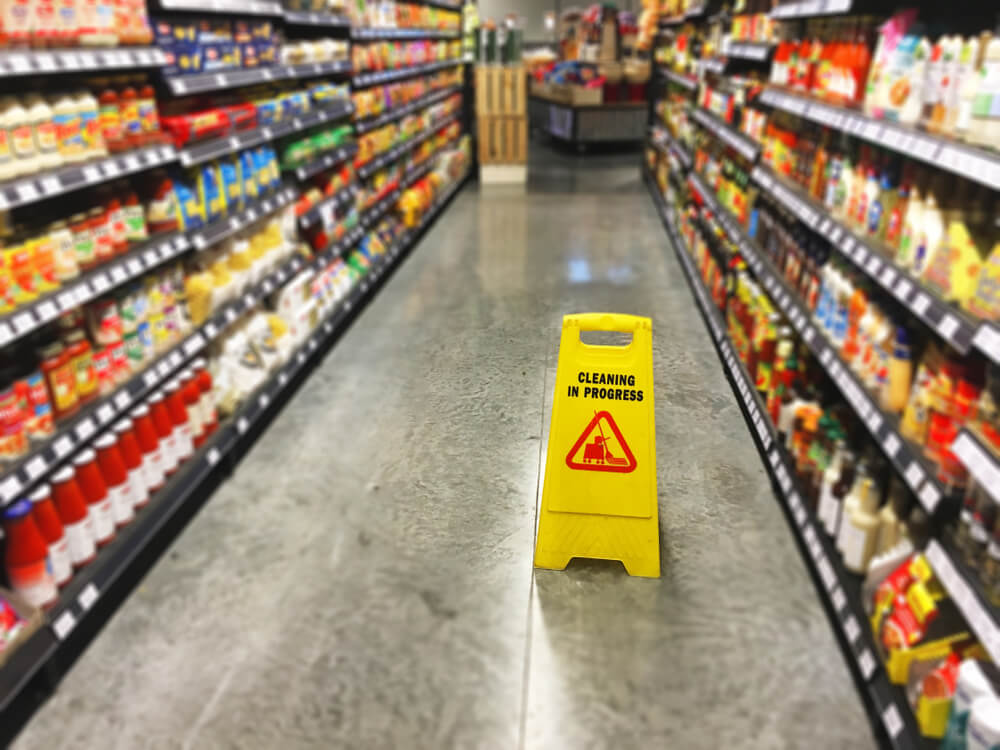
Davie Grocery Store Falls: Proving Hazard Duration
Slip-and-fall accidents in grocery stores can lead to serious injuries and complicated legal disputes. Grocery stores in Davie, Florida and throughout Broward County serve hundreds or even thousands of customers each day. With constant foot traffic, food products, and refrigerated items, spills and hazards can appear quickly.
When someone slips and falls in a grocery store, the central legal question is often how long the hazard was present before the accident occurred. In legal terms, this issue relates to whether the store had notice of the dangerous condition.
Proving the duration of the hazard—the amount of time a spill or dangerous condition existed before the fall—can be one of the most important parts of a grocery store injury claim.
Understanding how hazard duration is investigated can help injured individuals better understand their legal options after a fall.
Why Grocery Stores Present Slip Hazards
Grocery stores contain many conditions that can lead to slippery floors.
Common hazards include:
-
spilled drinks or liquids
-
dropped produce
-
leaking refrigeration units
-
melting ice near seafood or frozen food sections
-
water tracked in from outside
Because customers frequently handle food items and packages, spills can occur without warning.
Busy grocery stores in Davie and nearby communities such as Fort Lauderdale, Plantation, and Sunrise must monitor these areas carefully to maintain safe conditions.
Florida Premises Liability Law
Slip-and-fall accidents in grocery stores fall under premises liability law.
Property owners and businesses have a duty to maintain reasonably safe conditions for customers.
This duty generally includes:
-
inspecting floors regularly
-
cleaning spills within a reasonable time
-
warning customers about hazards
However, property owners are not automatically responsible for every accident that occurs.
In Florida, injured individuals must typically show that the business had notice of the hazardous condition.
Florida Law on Transitory Foreign Substances
Florida law specifically addresses slip-and-fall accidents involving temporary hazards such as spills.
Under Florida Statutes §768.0755, a person injured in a business establishment must prove that the business had actual or constructive notice of the dangerous condition.
Constructive notice can often be established by showing that:
-
the hazard existed long enough that the business should have discovered it
-
the condition occurred regularly and was therefore foreseeable
In grocery store cases, proving the duration of the hazard is often the key to establishing constructive notice.
What Is Hazard Duration?
Hazard duration refers to how long a dangerous condition existed before the accident happened.
For example, if a liquid spill remained on the floor for a significant amount of time without being cleaned, it may suggest that the store should have discovered and addressed the hazard.
The longer a hazard exists, the more likely it is that the store may be considered negligent.
Why Hazard Duration Matters
Businesses are expected to inspect their premises regularly to identify potential hazards.
If a spill existed for only a few seconds before a fall occurred, the store may argue that employees did not have enough time to address it.
However, if evidence shows that the hazard existed for an extended period of time, it may support the argument that the store failed to monitor the area properly.
This is why proving hazard duration can be critical in grocery store slip-and-fall cases.
Evidence Used to Prove Hazard Duration
Several types of evidence may help determine how long a hazard existed before the accident.
Surveillance Video
Many grocery stores have security cameras that record activity in aisles and checkout areas.
Surveillance footage may show:
-
when the spill first occurred
-
how long it remained on the floor
-
whether employees walked past the hazard
Video evidence can provide a clear timeline of events.
Store Inspection Logs
Grocery stores often maintain inspection or cleaning logs documenting when employees check aisles for hazards.
These logs may include:
-
times of inspections
-
employee names
-
notes about spills or hazards
If logs show that the area was not inspected for a long period of time, it may suggest negligence.
Witness Statements
Customers or employees who witnessed the hazard before the fall may provide important information.
Witnesses may report:
-
seeing the spill earlier
-
observing other customers avoid the area
-
noticing employees nearby who did not address the hazard
These statements can help establish how long the hazard existed.
Photographs of the Scene
Photographs taken immediately after the accident may reveal clues about the hazard’s duration.
For example:
-
dirty or tracked-through spills may indicate that several people walked through the area
-
partially dried liquids may suggest that the spill had been present for some time
These details may help investigators estimate how long the hazard existed.
Florida’s Comparative Negligence Rule
Florida follows a comparative negligence system, meaning that responsibility for an accident can be shared.
If an injured person is partially responsible for the fall, compensation may be reduced according to their percentage of fault.
For example, if damages total $100,000 but the victim is found 20 percent responsible, compensation may be reduced to $80,000.
Insurance companies sometimes argue that the injured person should have noticed the hazard.
Evidence showing that the hazard was difficult to see or existed for a long time may help address these claims.
Injuries Common in Grocery Store Falls
Slip-and-fall accidents in grocery stores can lead to serious injuries.
Common injuries may include:
-
fractures
-
head injuries
-
spinal injuries
-
soft tissue injuries
Medical providers across Broward County—including hospitals and clinics serving Davie, Fort Lauderdale, Plantation, and Sunrise—often treat individuals injured in these accidents.
Medical records documenting treatment are a key part of personal injury claims.
Insurance Company Defenses
Insurance companies representing grocery stores often raise several defenses in slip-and-fall cases.
Common arguments may include:
-
the spill occurred moments before the fall
-
employees had no opportunity to clean the hazard
-
warning signs were present
Proving hazard duration can help address these defenses.
Evidence showing that the hazard existed for a significant period may support the claim that the store failed to maintain safe conditions.
The Role of Personal Injury Lawyers
Personal injury lawyers often conduct detailed investigations in grocery store fall cases.
Legal professionals may help by:
-
requesting surveillance footage
-
reviewing store inspection logs
-
interviewing witnesses
Attorneys understand how to gather evidence that demonstrates how long a hazard existed before an accident.
This information may strengthen the claim during negotiations with insurance companies.
Protecting Your Rights After a Grocery Store Fall
Slip-and-fall accidents in grocery stores can cause serious injuries and unexpected medical expenses. Determining how long a hazard existed before the fall is often one of the most important aspects of the case.
For individuals injured in Davie, documenting the accident scene and seeking legal guidance can help ensure that important evidence—such as surveillance footage and inspection logs—is preserved.
Speak With a Fort Lauderdale Personal Injury Lawyer Today
If you were injured in a grocery store slip-and-fall accident in Davie or anywhere in Broward County, you may have the right to pursue compensation for medical expenses, lost wages, and other damages.
An experienced personal injury lawyer can investigate the accident, determine how long the hazard existed, and help you pursue the compensation you deserve.
Most personal injury law firms offer free consultations and operate on a contingency fee basis, meaning you pay no upfront fees.
If you have questions about a Davie grocery store fall claim, legal help is available 24/7 to help you move forward with confidence.